Detroit’s population has grown by several thousand residents over the past three years. MoveDetroit is one organization that hopes to continue this trend.
According to their website, MoveDetroit is “a historic, city-wide effort to grow Detroit’s population, build shared prosperity, foster thriving communities, and create even brighter futures for all Detroiters.”
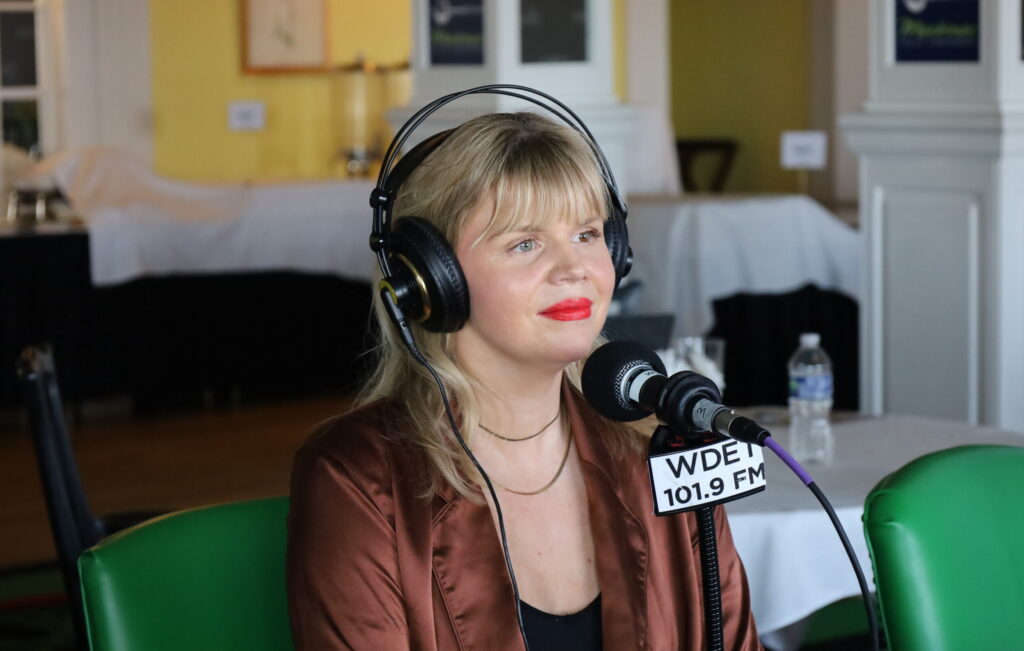
Previous Chief Growth Officer for the state of Michigan and current President of MoveDetroit Hilary Doe spoke to WDET about what has been driving Detroit’s population increase.
The following interview has been edited for length and clarity.
Doe: Detroit has so much going for it, but we’re seeing more and more folks choose to stay. First and foremost, I think that’s really important to mention. When people think about growth, they just think about folks moving in. What it starts with is the folks that are in Detroit choosing to stay and build their futures there. But we’re also seeing more area young people choosing to come to Detroit. That tends to be because we have more job opportunities.
We have a fast-growing startup ecosystem, one of the fastest in the world here in Detroit. It also means that we have more walkable, transit-rich communities in the city, and more and more of those, and really great housing opportunities. So, where there’s a housing crisis across the country, Detroit actually has relatively more accessible and affordable housing options.
McNamara: Where is that?
Doe: Where in the city? For Detroiters and for Michiganders, everything can feel expensive, for sure. But if you’re from Texas, or if you’re from other parts of the country, Michigan’s housing is just relatively more affordable.
McNamara: Alright, so, and is it popping up in certain neighborhoods? Because we hear typically about Midtown, News Center, downtown.
Doe: There’s been a lot of focus on downtown, and downtown helps us from a retail perspective, lots of walkability, but all different kinds of neighborhoods are really seeing a lot of wonderful investment and growth. The East Village area, for example, where the Shepherd has been getting a lot of coverage, has tons of new builds, actually single-family homes. We’re talking $300,000 kind of builds, but also the Corktown area has seen a lot of investment, as you mentioned, [and] small neighborhoods too.
Northwest Goldberg, if folks haven’t been there, you should head out. Communities really taking it upon themselves to make place-based investments, and there’s tons of wonderful activity and new builds, as well as renovation happening out there.
McNamara: Okay, so where do you come in? Where does MoveDetroit come in?
Doe: We launched in early April alongside the mayor and over 50 organizations, from the private sector to our community partners, and the intention is really to do the research as well as to launch programs and pilots to help ensure we’re doing whatever it takes to get folks to choose to stay or choose to move.
We launched a program called Make Detroit Home, for example, that offers support for folks that are choosing to stay in the form of down payments or investments in their business, as well as cohort programming, relocation support, those kinds of things, and that’s just the first program of many.
McNamara: There’s more to a neighborhood than just housing. What are you doing to support grocery stores, corner shops, barber shops?
Doe: All kinds of things. The mayor, for example, launched a program to turn folks out to different retail establishments around the city, and to support more folks who are starting stores across the city. MoveDetroit will be their marketing and amplification partner, but there’s a lot more to do as well. Education is a critical part. We need great schools around the city, and we need to continue investing in those. We’ll work with our partners on MoveDetroit to help with that as well.
McNamara: So, what are you doing at a place like this?
Doe: We’re going to meet with lots of folks here this week actually, to talk about entrepreneurship, increasing investment in our small business owners and our entrepreneurs. Like I mentioned, we need more jobs and higher median incomes in the city, and frankly, across the state. So, we have lots of new business starts. We want to keep those folks when they’re about to hire the first 100 employees. We don’t want to see capital flight, that means we need more capital to invest in Detroiters. So, we’re going to be chatting with lots of folks about that here.
McNamara: Detroit’s typically been a blue-collar town. Everybody wants tech jobs, but is there a kind of an underground specialty that Detroit hasn’t really tapped into yet when it comes to creating new jobs?
Doe: When we talk about more investment in small businesses and venture, we’re also for sure talking about investing in our blue collar heritage, because one of the things we’re great at is making things. And so when we talk about these new businesses, often it’s, ‘I have an innovation, an invention, and it’s the distinctive competency, and I’m creating a product, and I need to make it, so I’m going to do it here instead of doing it anywhere else in the country.’ We’re actually seeing folks from across the country with a new business come to Detroit in order to build it.
So, these kinds of jobs are really diverse. It’s not just a typical kind of app, we’re talking about also making things.
McNamara: So, what is it about Detroit that might attract somebody instead of just living in Oak Park or living in Chesterfield Township, something like that?
Doe: I think Detroit has this unique blend of the three things folks are looking for. They’re looking for great opportunities, great places, and welcoming communities. That’s what we found. We talked to over 20,000 Michiganders, asked them what they love and what’s between them and building their future here, and those were the three things that came to mind.
So, that means you need great economic opportunities, you need great walkable, transit-rich, amenity-rich communities, and you need welcoming community. I think Detroit does have those things in spades, and I also think Detroiters are willing to fight to make their communities even better. That’s exactly what’s required.
We know that we can get better in a variety of places, but we also have a really wonderful place to start.
McNamara: As the state’s chief growth officer, you get to see how the state of Michigan interacts with the city of Detroit, and vice versa. What could have been done better?
Doe: I think that there’s a lot that we can always get better at, but there was also a lot of good coordination, frankly. One of the things I think Michiganders are pretty good at, relative to the rest of the country—I had the chance to live in New York City, to live in Chicago, to live in California, I’m what they call a boomerang. We have a number of those here in Michigan. Honestly, we’re probably better at coordination than the average place.
It doesn’t always feel that way. I know when partisanship can feel quite heightened, but generally, between our small towns, between our counties and our communities and our state, there is—I’d argue—relatively good coordination, and especially in recent decades between Detroit and the state. I think folks recognize that as Detroit goes, so goes the state. We’ll continue to really work to make it clear what those connections are, but I think we’re doing all right.
McNamara: But you want an urbanized future, and so much of Michigan is rural, outside of southeast Michigan, Grand Rapids, Flint, Saginaw.
Doe: We recognize that Traverse City, for example, is incredibly beautiful, and the opportunity that it affords folks is just different… than the opportunity that Detroit affords folks. There’s a place for everybody, and the growth plan for Traverse City, or the UP, or Saginaw, it just looks different than what it looks like for Detroit. And so we really need programs that allow communities to invest in talent retention and attraction that’s unique to their place. In some places that will look like conservation, it’ll look like single family builds, in other places it’ll look like density… Detroit just has a different path than some of these other locations.