Inside a Michigan prison less than an hour from Detroit, 25 incarcerated men are doing something many people behind bars haven’t been able to do in decades. They’re working toward a bachelor’s degree from Wayne State University, paid for in part by federal Pell Grants.
Congress blocked those grants for incarcerated students in 1994. It restored access in 2023. But as the Trump administration restructures the Department of Education, the future of that funding is uncertain.
The question at the center of this story: Can a college degree behind bars change who walks out — and is the country willing to keep paying for it?
Jonathan Roden has lived both sides of that question. He spent 23 years in Michigan prisons. While he was inside, the college path available to him was an associate degree through Jackson College. He wanted more.
He came home in August of 2023. Nine days later, he started at Wayne State. In December, he graduated from the Mike Ilitch School of Business.
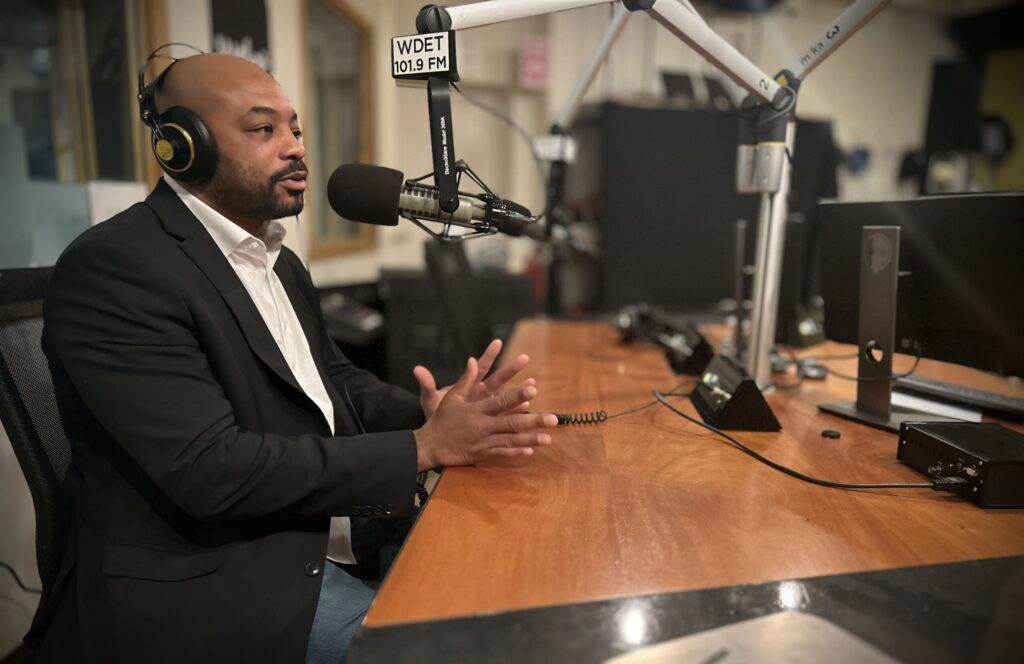
Now he walks back and forth through those same prison gates, this time as a coordinator for Wayne State’s prison education program. Roden, a Michigan Justice Fund fellow for WDET, is opening doors for men who are right where he used to be.
He joined Robyn Vincent on The Metro alongside audio from Carlton Banks, a student in the inaugural cohort at Macomb Correctional Facility. Banks was sentenced to life in prison for his role in the 1994 murder of a teenage Subway employee named Angela Garcia. He was 18. He’s now 48. Under a 2022 Michigan Supreme Court ruling, he expects to come home in 2028. He calls that prospect “a blessing, but not a celebration.”
Hear the full conversation using the media player above.
Listen to The Metro weekdays from 10 a.m. to noon ET on 101.9 FM and streaming on demand.
Subscribe to The Metro on Apple Podcasts, Spotify, NPR.org or wherever you get your podcasts.