
The Metro: The Gordie Howe Bridge is cheaper to cross. The cargo is about to cost more

Cheaper toll fees with the Gordie Howe Bridge won’t wipe out the upcoming 50% tariff on Canadian goods. Small business advisor Mark Lee explains what this means for Michiganders.
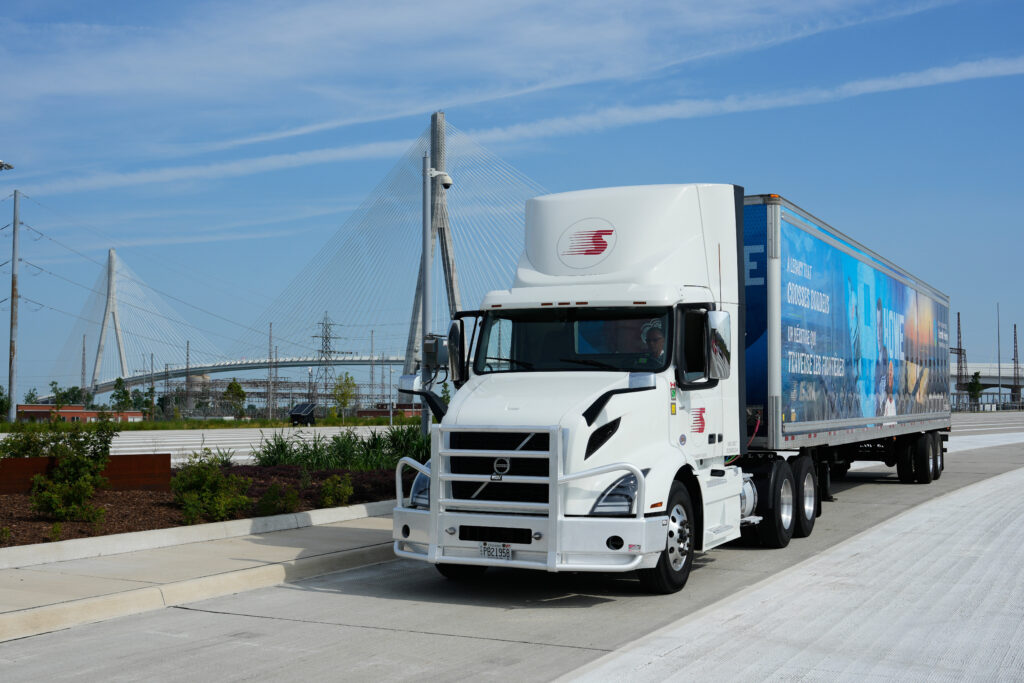
A semi truck is parked in front of the Gordie Howe bridge.

A truck is parked during a Canadian celebration marking the Gordie Howe International Bridge, which connects Detroit and Windsor, Ontario, on Friday, July 24, 2026, in Windsor, Ontario.


For the first time, truckers running between Detroit and Windsor have a choice of bridges — and the two crossings are competing for that business.

A semi pays about half as much to cross the new Gordie Howe Bridge as it does the Ambassador: roughly $35, versus $75.

But that’s a toll — what you pay to drive across. It has nothing to do with what is in the truck, and what is in the truck is about to get expensive. 

On Aug. 19, an additional 50% tariff is set to hit a long list of Canadian goods, among them wine, dairy, cement and hockey sticks. In other words, a business might save $40 getting a load across the river, then pay thousands more for the load itself.

So who actually comes out ahead here?

Mark Lee runs The Lee Group, where he has advised small businesses in this region for nearly 20 years. He joins host Robyn Vincent to talk tolls, tariffs, Delray, and whether Canadian visitors are coming back.

Hear the full conversation using the media player above.

Listen to The Metro weekdays from 10 a.m. to noon ET on 101.9 FM and streaming on-demand. Never miss an episode — subscribe to The Metro on Apple Podcasts, Spotify, YouTube, or NPR, or wherever you get your podcasts. Have thoughts? Email the show at metro@wdet.org

Support the podcasts you love.

One-of-a-kind podcasts from WDET bring you engaging conversations, news you need to know and stories you love to hear. Keep the conversations coming. Please make a gift today.

More stories from The Metro

Authors

  • Robyn Vincent
    Robyn Vincent is the co-host of The Metro on WDET. She is an award-winning journalist, a lifelong listener of WDET, and a graduate of Wayne State University, where she studied journalism. Before returning home to Detroit, she was a reporter, producer, editor, and executive producer for NPR stations in the Mountain West, including her favorite Western station, KUNC. She received a national fellowship from Investigative Reporters and Editors for her investigative work that probed the unchecked power of sheriffs in Colorado. She was also the editor-in-chief of an alternative weekly newspaper in Wyoming, leading the paper to win its first national award for a series she directed tracing one reporter’s experience living and working with Syrian refugees.
  • The Metro