Celiac disease presents unnecessary obstacles to dining out
People living with the autoimmune disease have trouble finding restaurants willing, able to keep food Celiac safe.
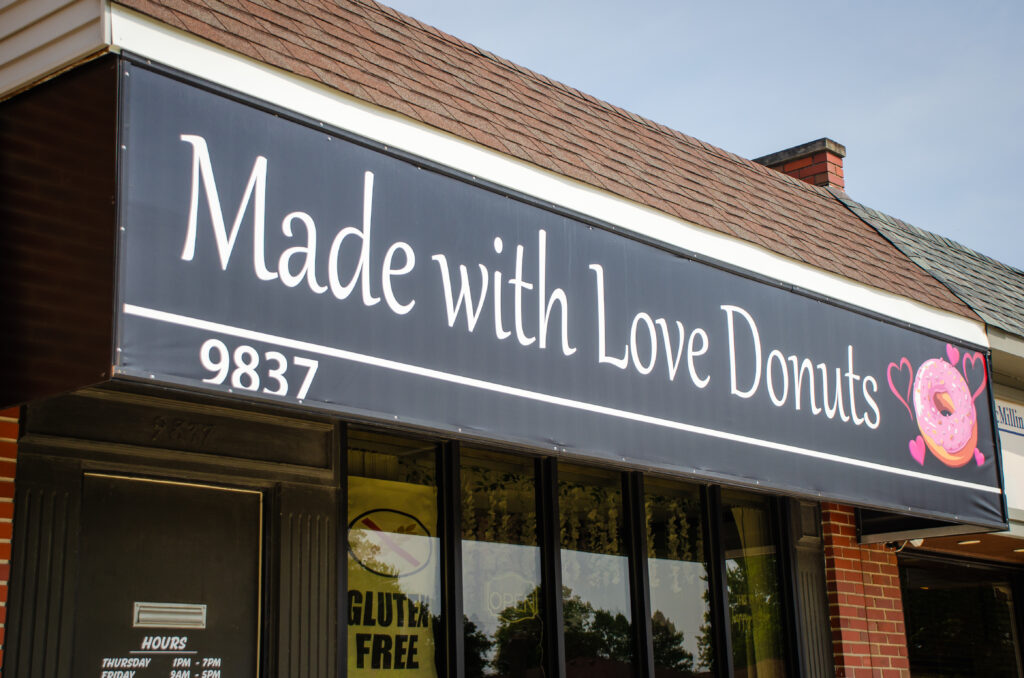
Made with Love Donuts in Allen Park, MI
In America, the “amber waves of grain” have come to represent the strength of American agriculture. But not all Americans are included in this idyllic picture. Those same waves of grain contain wheat, a crop that can pose serious health risks for people with celiac disease.
Raleigh Minning, a cancer survivor, is the owner of a gluten-free bakery: Made With Love Donuts. Through her work, she said she has come to understand some of the harmful symptoms her customers experience.
“Some people have rashes, they’ll get indigestion issues, all of these things, and I think that the community that is not celiac, or maybe they just want a couple of dollars out of it, don’t understand how serious it is,” Minning said.
Minning’s son was diagnosed with celiac seven years ago, and she wasn’t happy with how most restaurants handled his food.
“They would just push things to the side, or we would notice that they weren’t changing gloves, they weren’t using different utensils, and that made a mama bear very nervous,” Minning said.
Celiac causes servere reactions to gluten
Lana Scales is a clinical dietician who also has celiac disease. She explained that gluten is a protein that comes from wheat, a grain that can be found in bread, pasta and pastries. Even ordinary items like some brands of lip balm have trace amounts of gluten.
“When you eat gluten and your body considers it an invader, an enemy, and when it attacks it, it elicits this huge immune response that can cause a myriad of conditions,” Scales said.
Celiac disease is different than gluten intolerance, Scales said. The biggest difference between the two is that celiac is an autoimmune condition, while gluten intolerance creates a less impactful inflammatory response.
Amy Rosenberg, an optician with celiac, understands this all too well.
“My doctor told me I was going to get cancer, and at some point, die,” Rosenberg said. “So I think it flipped a switch in my head, and I was like, I should probably do something about this.”
Eating with Celiac poses obstacles
Rosenberg has been on a gluten-free diet for 31 years. Along the way, she found friends who faced the same challenges as she did. I joined her, Kaylene Whitaker and Margaret Clegg at a restaurant in Novi that offered a variety of gluten-free options.
Whitaker, who had intense symptoms for two years before her diagnosis, struggled with being understood.
“It’s frustrating when people just assume it’s something I choose, and they think I’m being picky,” Whitaker said. “We get to have food preferences just like everybody else, on top of also having to accommodate for celiac.”
Rosenberg agreed, adding that even family members have a hard time understanding her dietary needs.
“A lot of people were like, ‘oh, I’m sorry,’ but I’ve been gluten-free for 31 years, so it’s what I know. But I do have some family members that are still confused by it, and it’s kind of offensive,” Rosenberg said.
After the food arrived, Clegg brought out her phone to take photos for her blog, MI Gluten-Free Gal. She was working on a post about the restaurant’s gluten-free items.

She talked about how her father’s celiac journey led her to helping people across Michigan find safe, reliable restaurants to enjoy.
“I have a whole blog post on my website telling the story about me and my dad, and all of that, and how after I was diagnosed, that helped him to pay attention to the diet and do what he needed to do to make himself better,” Clegg said.
Gluten-free restaurants can minimize risk, create comfort
One restaurant Clegg highlights on her blog is Tru Pizza Co. in Wyandotte. They have a completely gluten-free menu, and Anthony Cipolla is the owner. He said he was inspired to join the business because his wife has celiac.
From there, he made it his mission to be a place that truly has food for everyone.
However, Cipolla said he sees a stigma surrounding a completely gluten-free restaurant. He points towards celebrities glamorizing the diet and comedians making it the butt of their jokes.
“When I was a kid, peanut allergies were so much more common,” Cipolla said. “That was the only allergy that anyone really cared about in the field. If everybody treated every allergy like that, it would make this a lot easier.”
Scales, the dietician, spoke about the dangers of cross contamination that can result from restaurants not taking proper precautions.
“The amount of gluten that can fit on the head of a writing pen; you might not be able to see that, but it’s enough to cause a reaction,” Scales said.
But at places like Tru Pizza or Minning’s bakery, the fear of cross contamination is nearly eliminated. Minning said she finds fulfillment in being able to give back to her community and hopes to see more gluten-free establishments in the future.
“I love the people who come in here, the stories that we’re able to share,” Minning said, “we’re able to hug, cry, laugh, smile, all of the things that I definitely don’t think that I would be getting out of it if I was doing regular food.”
Minning said she understands why most restaurants don’t take the risk of trying to accommodate celiac, but she sees a huge reward in it for those who do.