The Metro: The silence around Sudan, and a poet trying to break it

Nearly 14 million people are displaced. The U.S. and the U.N. have both used the word genocide. Sudanese American poet Khadega Mohammed explains why that still hasn’t been enough to break through.
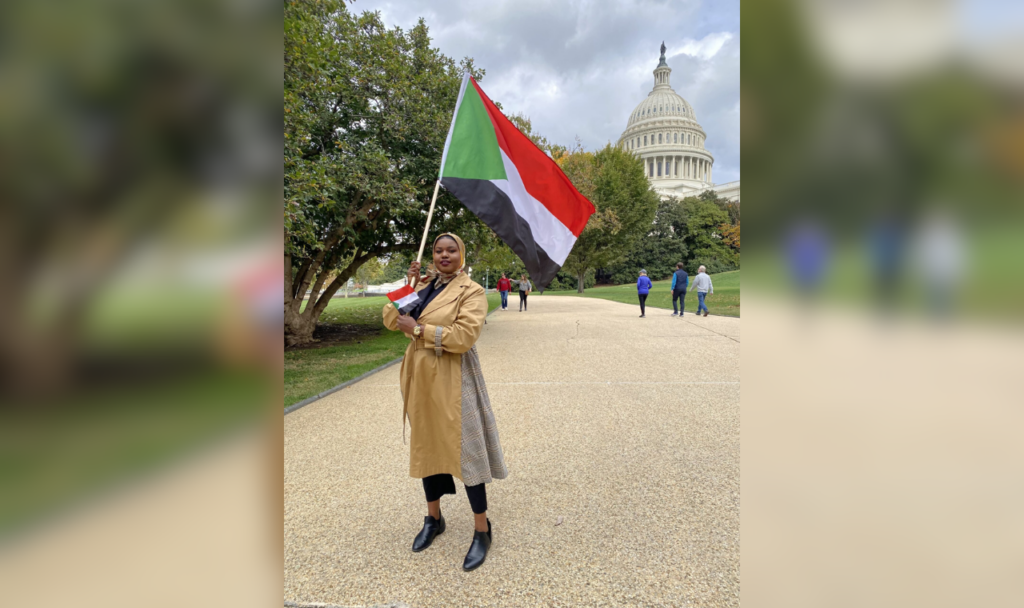
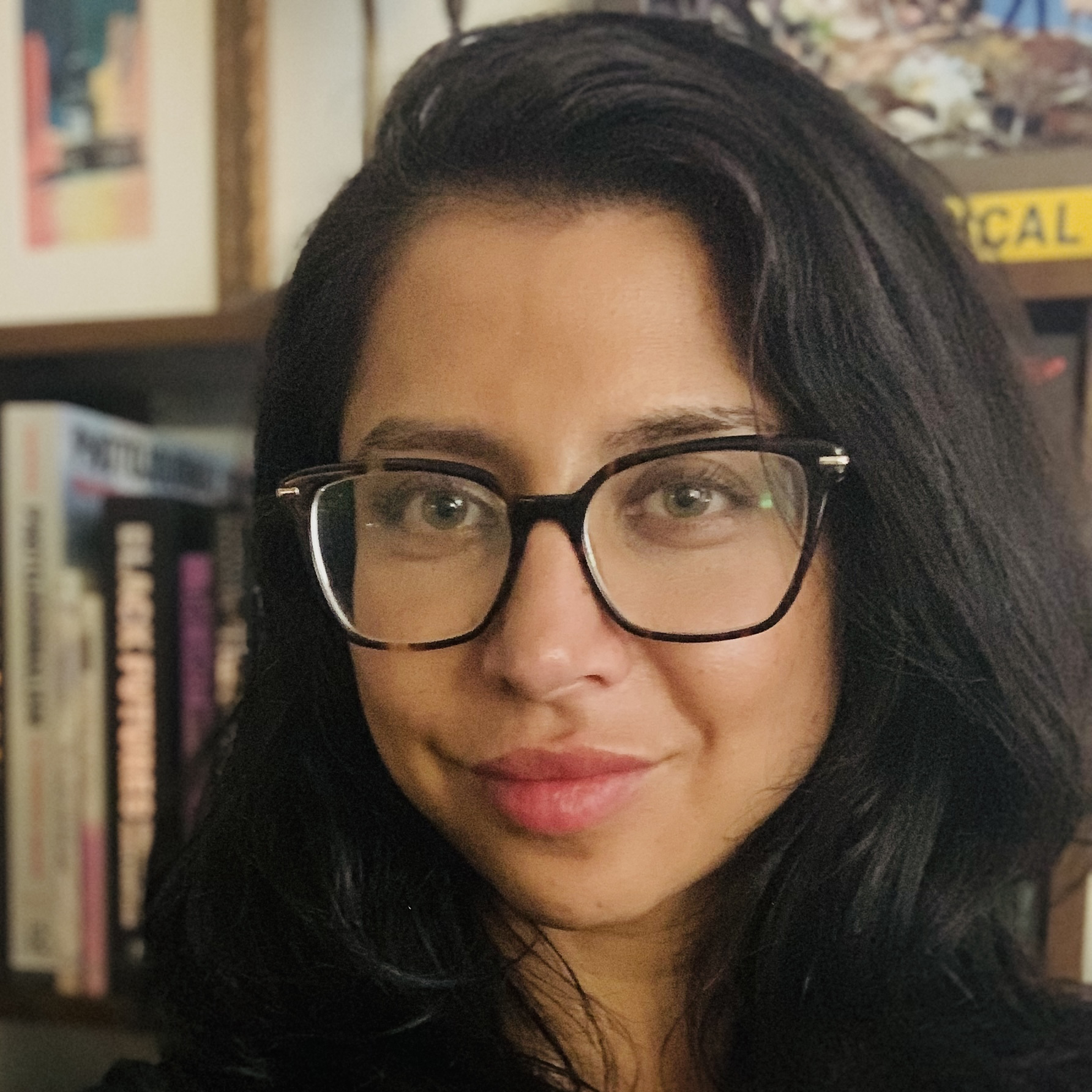
Khadega Mohammed

Khadega Mohammed waves the Sudanese flag at a 2021 protest for Sudan in Washington, DC.
Four years in, the war in Sudan has produced the largest displacement crisis in the world. Nearly 14 million people have been forced from their homes. Both the United States government and a United Nations fact-finding mission have called the violence a genocide, citing a coordinated campaign by the paramilitary Rapid Support Forces against the Zaghawa and Fur communities of Darfur.

In the United States, the response has been quiet.

Khadega Mohammed has spent much of her life trying to say something about that silence — through poetry, community organizing, and her work at the Arab American National Museum in Dearborn, where she is the only Sudanese person and the only Black person on staff.

Born in Sudan, raised in Saudi Arabia, and resettled in the United States with her family in 2007, Mohammed is a spoken word artist whose signature poem, “Between,” opens the PBS AfroPoP documentary “Revolution from Afar.”

She joined Robyn Vincent on The Metro to talk about the Sudan she remembers, the America she lives in, and the in-between where her poetry was born.

Hear the full conversation using the media player above.

Listen to The Metro weekdays from 10 a.m. to noon ET on 101.9 FM and streaming on demand.

Subscribe to The Metro on Apple Podcasts, Spotify, NPR.org or wherever you get your podcasts.

Support the podcasts you love.

One-of-a-kind podcasts from WDET bring you engaging conversations, news you need to know and stories you love to hear. Keep the conversations coming. Please make a gift today.

More stories from The Metro

Authors

  • Robyn Vincent
    Robyn Vincent is the co-host of The Metro on WDET. She is an award-winning journalist, a lifelong listener of WDET, and a graduate of Wayne State University, where she studied journalism. Before returning home to Detroit, she was a reporter, producer, editor, and executive producer for NPR stations in the Mountain West, including her favorite Western station, KUNC. She received a national fellowship from Investigative Reporters and Editors for her investigative work that probed the unchecked power of sheriffs in Colorado. She was also the editor-in-chief of an alternative weekly newspaper in Wyoming, leading the paper to win its first national award for a series she directed tracing one reporter’s experience living and working with Syrian refugees.
  • The Metro